A year-round commitment
The production of raisins is divided into several steps, the first being the growing of vineyards.
For proper growing, a task carried out throughout the year, it is necessary to attend to pruning practices, irrigation, fertilization, and pest control.
Pruning involves the removal of certain parts of the vine to control its growth, aiming at equalizing the grape quality throughout the trellis; it is carried out between June and August. Irrigation tasks are performed year-round through drip systems while the vineyards are growing, so as to continuously supply water to the soil.
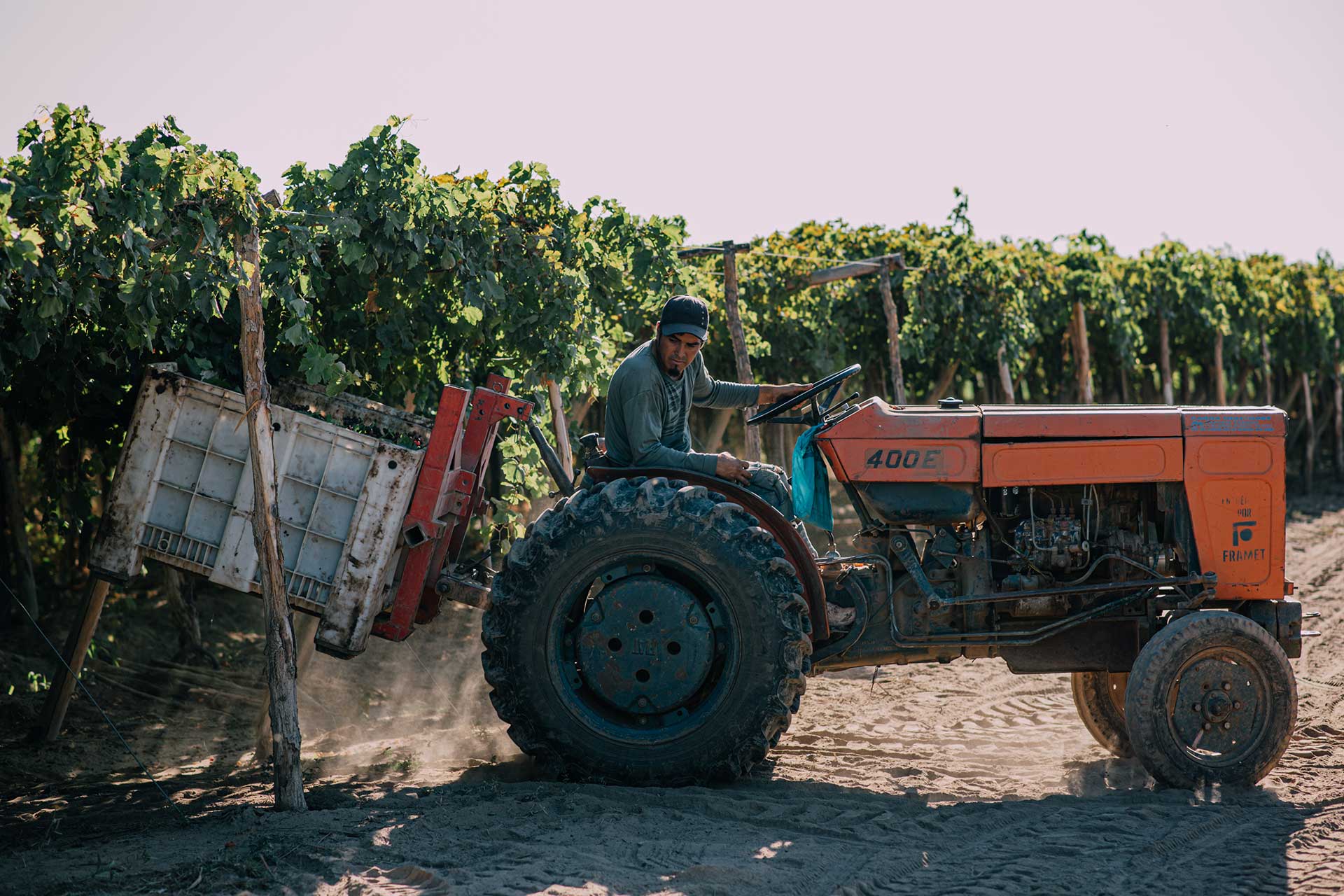
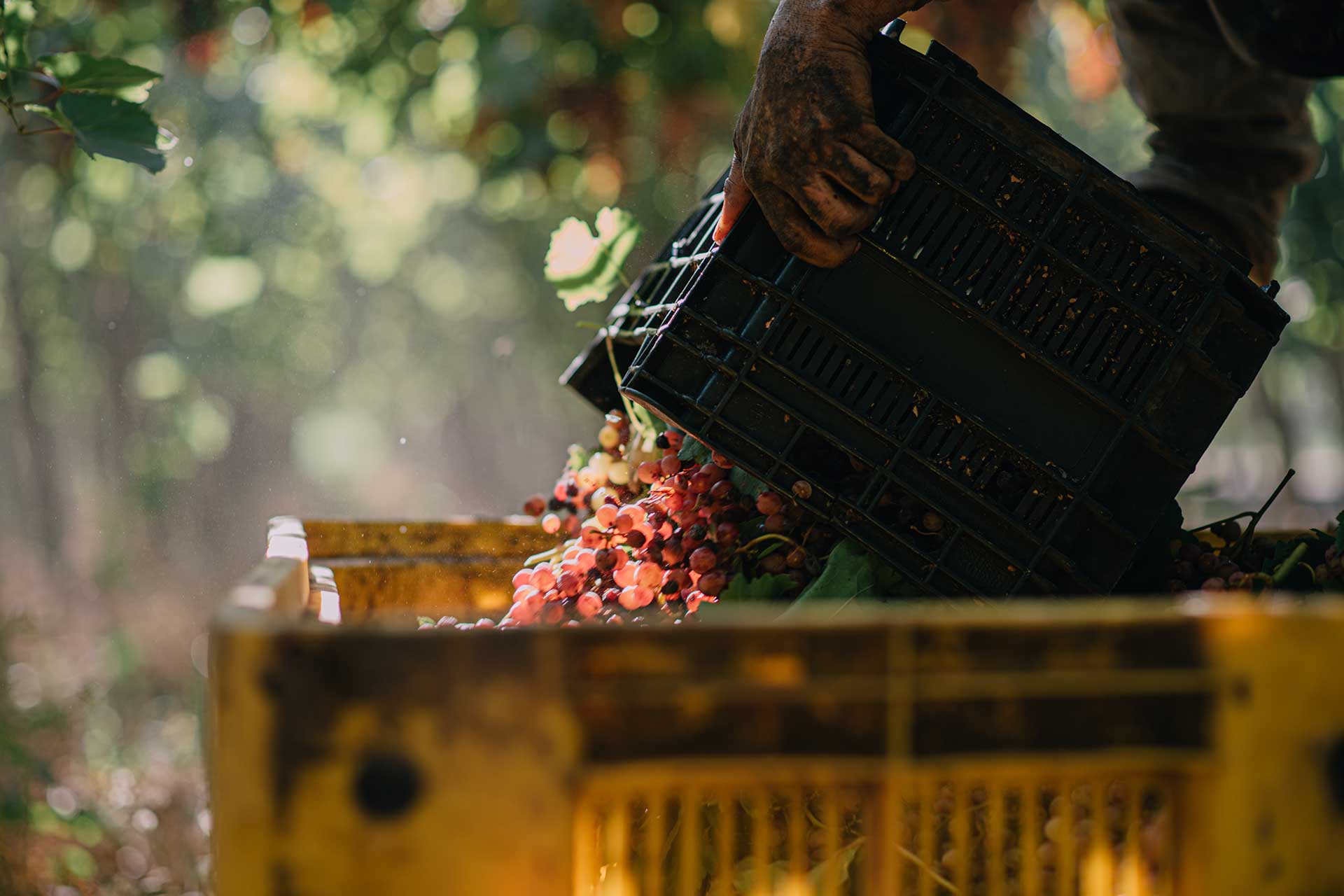
Grapes are harvested when they reach their optimal sugar content, starting at mid-January up until March. Clusters are hand-cut by rural workers and placed in crates, then palletized for transport to the drying facility. The drying facility is entirely built of clean stones to ensure uniform drying and, in case of rain, immediate water drainage. Upon arrival at the drying facility, the pallets are unloaded, and the grape clusters are placed on racks for sun exposure. There, the grapes are left to dry for 2 to 3 weeks, reducing their moisture content from 75% to less than 15%. Once at the optimal drying point, the drying facility staff collects them and places them in bins for transport to the plant. They are then fumigated and stored in warehouses to be finally processed.
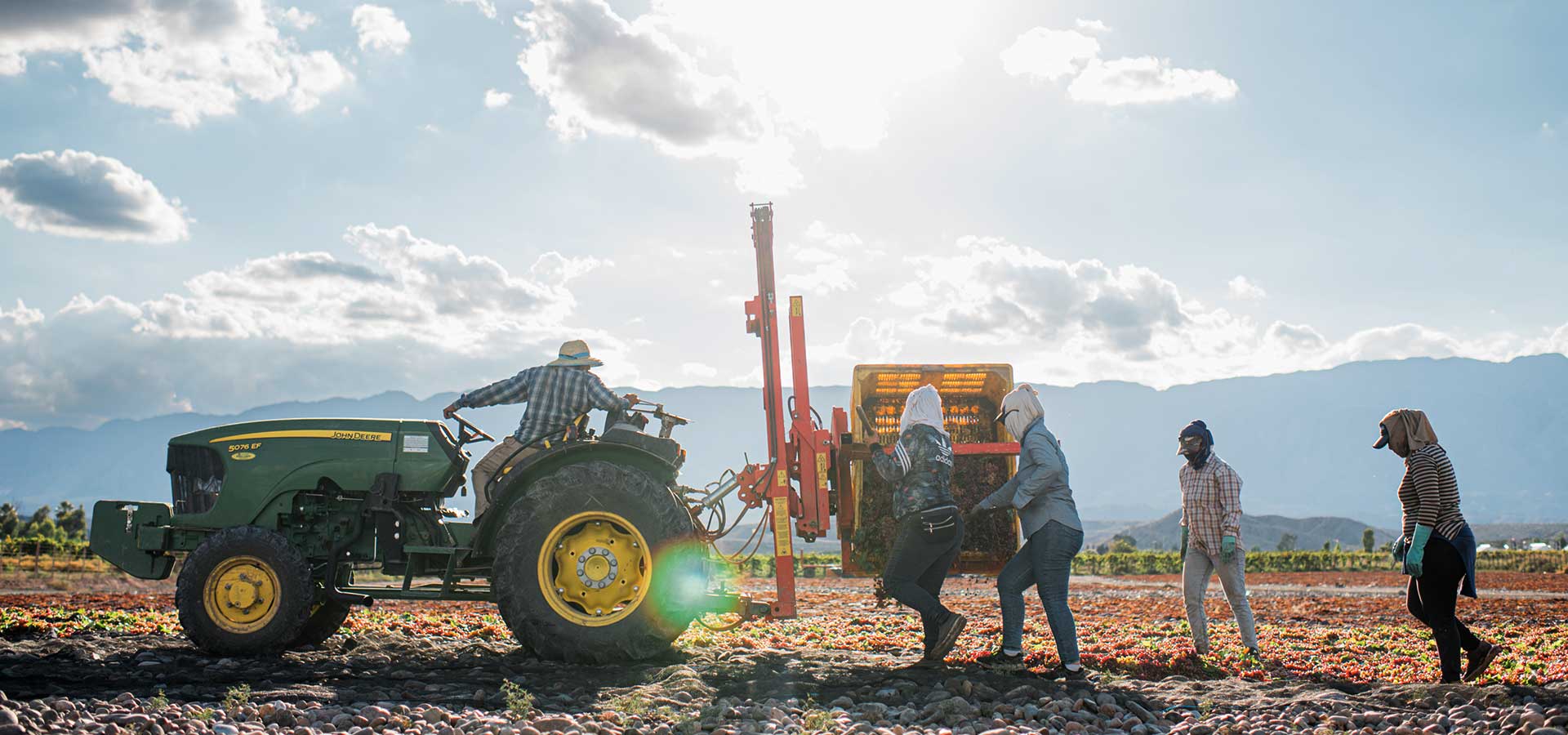
The drying facility is entirely built of clean stones to ensure uniform drying and, in case of rain, immediate water drainage. Upon arrival at the drying facility, the pallets are unloaded, and the grape clusters are placed on racks for sun exposure.
There, the grapes are left to dry for 2 to 3 weeks, reducing their moisture content from 75% to less than 15%. Once at the optimal drying point, the drying facility staff collects them and places them in bins for transport to the plant. They are then fumigated and stored in warehouses to be finally processed.
The raw raisins are fumigated a second time to eliminate any living insects or eggs that may remain. Immediately after, destemming and grading take place, which task involves removing all types of sticks and leaves for sizing according to each customer’s requirements.
The next step is washing to remove any dirt or debris. They are then polished with vegetable oil to protect the raisins’ skin. They then pass through a sorter to detect and separate any foreign objects; such as stems, pedicels, and remove any raisin that does not meet the customer’s specification characteristics. Subsequently, a visual inspection carried out by highly skilled operators will verify the quality of the raisins. Finally, the product is X-ray inspected again, not only for its external appearance but also internally, for quality verification.
The weighing and packaging of the product is the last step in the process. The sealed box is analyzed by a state-of-the-art metal detector, for them to be further palletized and stacked in a warehouse, with controlled temperature and humidity.